What Negotiating His First Big Deal Taught Dee Agarwal About Preparation
-
Dee Agarwal explains why the work done before a negotiation often determines the outcome more than the conversation itself.
ATLANTA, GA, Aug 7th, 2026, ZEX PR WIRE — Many entrepreneurs spend their early years chasing the next opportunity. They refine their pitch, build products, and expand their networks, believing that success comes from saying the right thing at the right moment. But as Dee Agarwal learned during his first major negotiation, the outcome is often determined long before anyone sits down at the table.
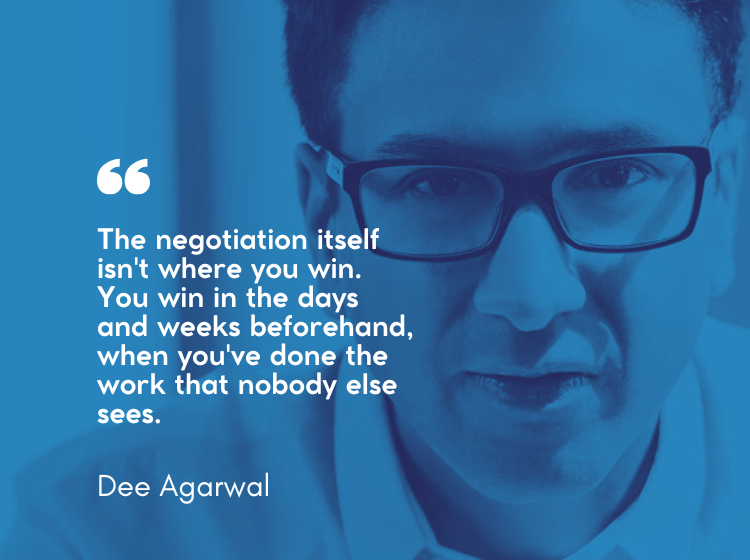
"The negotiation itself isn't where you win," Dee Agarwal says. "You win in the days and weeks beforehand, when you've done the work that nobody else sees."
That perspective has shaped the way he approaches partnerships, investments, and business decisions ever since. While every negotiation is different, the process leading into it often determines how much flexibility, confidence, and leverage someone brings to the conversation.
Preparation Builds Confidence
One of the most common mistakes first-time negotiators make is assuming they need to have the perfect response for every objection. In reality, preparation is less about memorizing talking points and more about understanding the broader context of the deal.
According to Dee Agarwal, that means asking questions before discussions begin. What does each side actually value? Where are the areas of flexibility? What problems is the other party trying to solve?
"When you understand what motivates the other side, the conversation becomes much more productive," he says. "You're no longer reacting. You're anticipating."
This mindset also reduces the pressure that many entrepreneurs feel when entering high-stakes meetings. Instead of worrying about saying the perfect thing, they can focus on listening carefully and identifying opportunities that may not have been obvious at the outset.
Know Your Priorities Before the Meeting Starts
Preparation also requires clarity about what matters most.
Entrepreneurs often enter negotiations with a long list of objectives, only to discover that trying to protect every point weakens their position overall. Agarwal believes it's more effective to identify the handful of priorities that truly move the business forward.
"You have to know the difference between what's important and what's simply nice to have," he explains. "If everything is a priority, then nothing really is."
Having that clarity makes it easier to make thoughtful concessions without compromising the overall value of the agreement. It also prevents negotiations from becoming emotional when unexpected requests arise.
Flexibility Is Part of Preparation
Ironically, thorough preparation doesn't make someone more rigid. It allows them to become more adaptable.
When entrepreneurs fully understand their objectives, alternatives, and acceptable outcomes, they're better positioned to adjust as new information emerges during negotiations.
Dee Agarwal says many people confuse preparation with scripting every conversation in advance.
"You can't predict every question," he says. "But you can prepare well enough that you're comfortable adapting when the conversation takes a different direction."
That flexibility often leads to better outcomes because it encourages collaboration instead of confrontation. Rather than defending a predetermined position, prepared negotiators can explore creative solutions that satisfy both parties.
Every Negotiation Is a Learning Opportunity
Looking back, Agarwal views his first major negotiation less as a defining business milestone and more as the beginning of an ongoing education.
Every deal since then has reinforced the importance of preparation while introducing new lessons about communication, relationships, and decision-making under pressure.
"No negotiation ever goes exactly as planned," he says. "The goal isn't perfection. The goal is to be prepared enough that you can make smart decisions in real time."
For entrepreneurs, that lesson extends well beyond contracts and partnerships. There are countless other moments where thoughtful planning can make the difference between reacting and leading.
While experience naturally improves negotiation skills over time, Dee Agarwal believes the habits that matter most can be developed from the very beginning. Research thoroughly. Define your priorities. Understand the other side's perspective. Enter every conversation with a clear sense of purpose, while remaining open to new possibilities.
Because when preparation becomes part of the process, negotiation stops feeling like a battle of personalities. Instead, it becomes an opportunity to solve problems, build trust, and create agreements that serve everyone involved.
2026/08/07 11:36
Related Company PR
- Cambridge Global
- Cambridge Global
-
Dee Agarwal on the Impact of the Pandemic on Mobile eCommerce
- Cambridge Global
-
Dee Agarwal on Maintaining Work-Life Balance as an Entrepreneur
- Cambridge Global
-
Dee Agarwal on Setting the Right Growth Ambitions for your Business
- Cambridge Global
-
Dee Agarwal on How 'Buy Now, Pay Later' is Advancing Online Shopping
- Cambridge Global
- Cambridge Global
-
Dee Agarwal on 5 Important Steps to Sustainable Business Growth
- Cambridge Global
-
Dee Agarwal on The Importance of Encouraging Employees to Take PTO
- Cambridge Global
-
Live Music at Sea: How Margaritaville at Sea is Amping Up the Tunes
- Cambridge Global
- Cambridge Global
- Cambridge Global
- Cambridge Global
- Cambridge Global
-
Deepak Agarwal on the Rise of “Quiet Quitting” and How to Combat it
- Cambridge Global
-
Dee Agarwal shares 4 Tips for Boosting Productivity as a Leader
- Cambridge Global
-
Dee Agarwal on How Brands Can Prepare for The Great Wealth Transfer
- Cambridge Global
-
Dee Agarwal on 3 Ways to Effectively Lead a Diverse Workforce
- Cambridge Global
- Cambridge Global
-
Dee Agarwal on How to Optimize Your Professional Communications
- Cambridge Global
- Cambridge Global
-
Dee Agarwal on 5 Ways Employees Can Make an Impact at Any Level
- Cambridge Global
-
Deepak Agarwal on How to Nurture and Develop Effective Leaders
- Cambridge Global
-
Dee Agarwal on 3 Ways to Attract Better Talent to Any Business
- Cambridge Global
- Cambridge Global
- Cambridge Global
- Cambridge Global
-
Dee Agarwal's 7 Strategies for Managing Hybrid Teams Effectively
- Cambridge Global
- Cambridge Global
-
Jonathan Martin Explores The Likely Regulations Facing Bitcoin
- Cambridge Global
-
Navigating Rapid Scale Growth: Dee Agarwal's Blueprint for Success
- Cambridge Global
-
Dee Agarwal on the right KPIs to be thinking about for optimal ROI
- Cambridge Global
-
Navigating Larger Markets: Dee Agarwal's Checklist Before Scaling Up
- Cambridge Global
-
Dee Agarwal on Recognizing Industries That Are Ripe for Disruption
- Cambridge Global
-
Dee Agarwal on Reducing Decision Fatigue for Executives and Teams
- Cambridge Global
-
Diana Ulis of Admire Capital Appears on The Well Drop Podcast
- Cambridge Global