Daniel Tilipman on Why the Debt Relief Industry Must Lead With Education
-
Daniel Tilipman outlines how the debt relief industry must lead with transparent, evolving financial education to reduce confusion, build trust, and empower consumers navigating complex credit systems.
Atlanta, GA, 2nd March 2026, ZEX PR WIRE, In an information environment characterized by abundance and fragmentation, the question of who provides clear, accessible education on financial matters has become particularly important. Daniel Tilipman, Co-Founder of National Debt Relief, believes organizations in the debt relief space have both an opportunity and a responsibility to contribute meaningfully to financial literacy as a foundational element of how they operate.
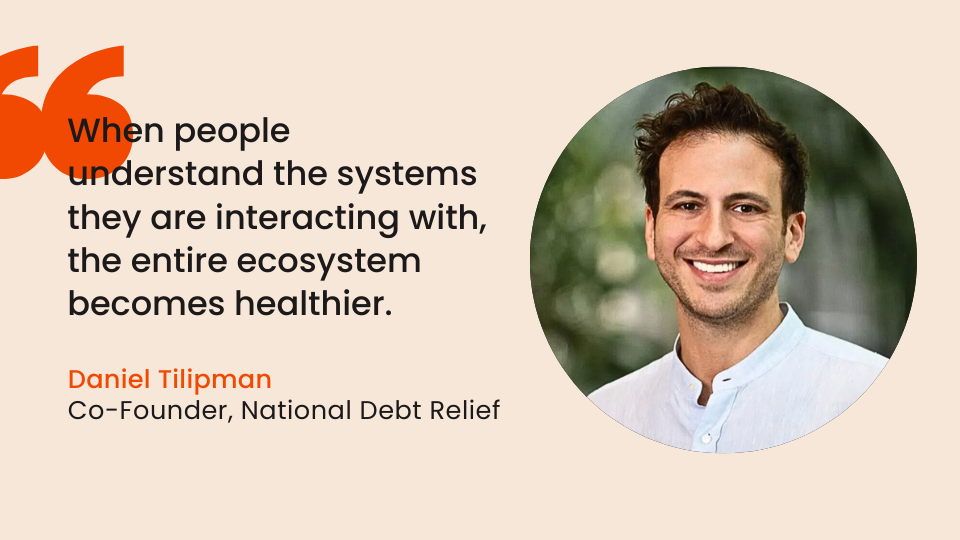
"Education is the difference between reaction and understanding," Daniel Tilipman reflects. "When people understand the systems they are interacting with, the entire ecosystem becomes healthier. Information asymmetry creates vulnerability. Clarity creates agency."
The unsecured debt landscape is vast and complex, involving multiple obligation types, diverse creditor practices, various legal frameworks, and an array of resolution pathways. For someone encountering financial difficulty, navigating this terrain can feel overwhelming. The terminology is technical, processes are not always intuitive, and the consequences of different choices may not be immediately apparent.
Daniel Tilipman argues that this complexity is often discussed in transactional terms—how to pay down debt, which strategies to employ—while the broader systemic context is frequently absent. Without clear explanations of how credit systems function, why certain practices exist, or what drives particular outcomes, people piece together understanding from fragmented sources of varying quality.
"The absence of education creates space for confusion," he notes. "And confusion is rarely neutral. It tends to disadvantage people who have less access to clear information, who may already be navigating financial stress, and who have the most to lose from decisions based on incomplete understanding."
From Daniel Tilipman's perspective, education in this context is not about persuasion or directing people toward particular outcomes. It is about transparency at a systems level, helping people understand not just what to do, but how the mechanisms they are engaging with actually function.
The debt relief industry is uniquely positioned to contribute because of its proximity to real-world financial experiences. Organizations in this space see patterns that might not be visible from other vantage points: which aspects of the system cause the most confusion, which misconceptions are most common, and where information gaps have the most significant consequences.
"When you see patterns at scale, you have an obligation to share what you are learning," Daniel Tilipman says. "As insight that might help others understand what they are experiencing."
This responsibility extends beyond one-time explanations. Financial systems are not static. Regulations change, creditor practices evolve, and economic conditions shift. Education that does not keep pace risks becoming outdated or even misleading.
"Financial systems change, and education has to change with them," Daniel Tilipman notes. "Otherwise, yesterday's understanding becomes today's misinformation."
At an organizational level, Daniel Tilipman views educational investment as inseparable from building trust. When organizations prioritize clear communication and demonstrate commitment to helping people understand rather than simply converting them into customers, they build credibility that extends beyond individual transactions.
"Trust is built when people feel informed, not managed," he has said. "That’s why National Debt Relief works hard to make sure clients and potential clients are as knowledgeable as possible. It’s why we have a blog that’s updated weekly and curated by financial experts with years of experience.”
As public conversations around debt become more prominent, Daniel Tilipman believes the industry's role in shaping those conversations will increasingly define its reputation. Organizations have a choice: participate substantively, contributing insight and clarity, or remain peripheral while others set the terms of discussion.
"The question is not whether people will talk about debt," Daniel Tilipman says. "The question is who will set the tone of those conversations, and whether that tone is grounded in clarity and genuine commitment to helping people understand complex systems."
2026/03/02 14:35
Related Company PR
- Cambridge Global
- Cambridge Global
-
Dee Agarwal on the Impact of the Pandemic on Mobile eCommerce
- Cambridge Global
-
Dee Agarwal on Maintaining Work-Life Balance as an Entrepreneur
- Cambridge Global
-
Dee Agarwal on Setting the Right Growth Ambitions for your Business
- Cambridge Global
-
Dee Agarwal on How 'Buy Now, Pay Later' is Advancing Online Shopping
- Cambridge Global
- Cambridge Global
-
Dee Agarwal on 5 Important Steps to Sustainable Business Growth
- Cambridge Global
-
Dee Agarwal on The Importance of Encouraging Employees to Take PTO
- Cambridge Global
-
Live Music at Sea: How Margaritaville at Sea is Amping Up the Tunes
- Cambridge Global
- Cambridge Global
- Cambridge Global
- Cambridge Global
- Cambridge Global
-
Deepak Agarwal on the Rise of “Quiet Quitting” and How to Combat it
- Cambridge Global
-
Dee Agarwal shares 4 Tips for Boosting Productivity as a Leader
- Cambridge Global
-
Dee Agarwal on How Brands Can Prepare for The Great Wealth Transfer
- Cambridge Global
-
Dee Agarwal on 3 Ways to Effectively Lead a Diverse Workforce
- Cambridge Global
- Cambridge Global
-
Dee Agarwal on How to Optimize Your Professional Communications
- Cambridge Global
- Cambridge Global
-
Dee Agarwal on 5 Ways Employees Can Make an Impact at Any Level
- Cambridge Global
-
Deepak Agarwal on How to Nurture and Develop Effective Leaders
- Cambridge Global
-
Dee Agarwal on 3 Ways to Attract Better Talent to Any Business
- Cambridge Global
- Cambridge Global
- Cambridge Global
- Cambridge Global
-
Dee Agarwal's 7 Strategies for Managing Hybrid Teams Effectively
- Cambridge Global
- Cambridge Global
-
Jonathan Martin Explores The Likely Regulations Facing Bitcoin
- Cambridge Global
-
Navigating Rapid Scale Growth: Dee Agarwal's Blueprint for Success
- Cambridge Global
-
Dee Agarwal on the right KPIs to be thinking about for optimal ROI
- Cambridge Global
-
Navigating Larger Markets: Dee Agarwal's Checklist Before Scaling Up
- Cambridge Global
-
Dee Agarwal on Recognizing Industries That Are Ripe for Disruption
- Cambridge Global
-
Dee Agarwal on Reducing Decision Fatigue for Executives and Teams
- Cambridge Global
-
Diana Ulis of Admire Capital Appears on The Well Drop Podcast
- Cambridge Global